
News
Selling Surplus Without Undercutting Your Counter
What the research says about discounting, and the mistake that actually costs money
14 September 2026
The objection, stated fairly
Every retailer asked to list surplus bags raises the same thing, and it deserves a straight answer rather than reassurance. If people can buy a bag of your food for a third of the price at five o'clock, why would they keep paying full price at eleven?
It is a reasonable worry. Discounting can train customers to wait, and a shop that becomes known for cheap end-of-day stock can find that reputation arriving before its reputation for quality does.
The research on this is more interesting than either side of the argument usually admits. The risk is real, but it is not where most people expect it to be.
The people buying surplus are mostly not your regulars
Start with who actually turns up. Reporting in The Grocer on UK surplus and reduced-price platforms found that around half of shoppers coming in for reduced items were new to the store, and that about two thirds bought full-priced items alongside the discounted ones.
That is the opposite of cannibalisation. It describes a discount that brings in people who were not walking past your window before, and who then buy something at full price while they are inside.
These are platform and supplier figures rather than independent audits, so treat the exact percentages with some caution. The direction is consistent though, and it matches what most retailers report once they have run bags for a few months: the bag buyer at closing time is usually a different person from the customer who came in at morning tea.
The real risk is the oven, not the counter
The strongest study on this comes from Luyi Yang at UC Berkeley and Man Yu at HKUST, published in Management Science in 2025. They modelled surprise-bag clearance against traditional markdowns and against no clearance at all.
Surprise clearance came out best for store profit. It also induced the most production of the three, and that is the finding worth sitting with. Their conclusion was that clearance sales can end up generating more waste than having no clearance at all, because the shop quietly starts baking for the bags.
That is the trap, and it has nothing to do with undercutting your counter. It is that a reliable outlet for leftovers stops being an outlet for leftovers and becomes a second production line, at a third of the price, with all the same input costs.
Margin decides whether this works for you
The same study found the model is not equally suited to every shop. Surprise clearance worked well for high-margin food, the sort sold by premium bakeries and restaurants, where a discounted bag still carries a sensible contribution.
It was most likely to backfire on narrow-margin products, where the discount does not leave much behind and the incentive to produce more is the main effect. A grocer selling staples is in a different position from a patisserie selling pastries, and should be more cautious.
They also found that bags made of similar items generate less waste than bags of mixed assortments, because a customer who wanted bread and got bread throws less of it away.
Five things that keep a bag genuinely surplus
All of which points at a short set of controls rather than a decision to be for or against discounting.
- Never bake to fill bags. The moment production rises to meet bag demand, the economics invert and you are selling new stock at clearance prices.
- Set the number from what was actually left over last week, not from what you could sell if you made more.
- Keep collection at the end of trade. A window that opens mid-afternoon competes with your own counter. One that opens as you are closing cannot.
- Vary what goes in, and vary how many you list. Predictability is what teaches a regular to wait.
- Keep bags reasonably homogeneous where you can. It wastes less at the other end and it sets expectations you can meet.
What it comes down to
Selling surplus does not undercut your counter. Producing surplus does.
The distinction matters because the second one is easy to slide into without noticing, and it arrives disguised as success: bags selling out, a new revenue line, a reason to make a few more tomorrow.
Foody Bag is built for the first case. A store lists what it expects to have spare, sets the collection window and the price, and someone nearby collects before close. If a shop finds itself making extra to meet demand on the platform, that is worth catching early, because at that point the food is not surplus and the arithmetic stops working in the shop's favour.
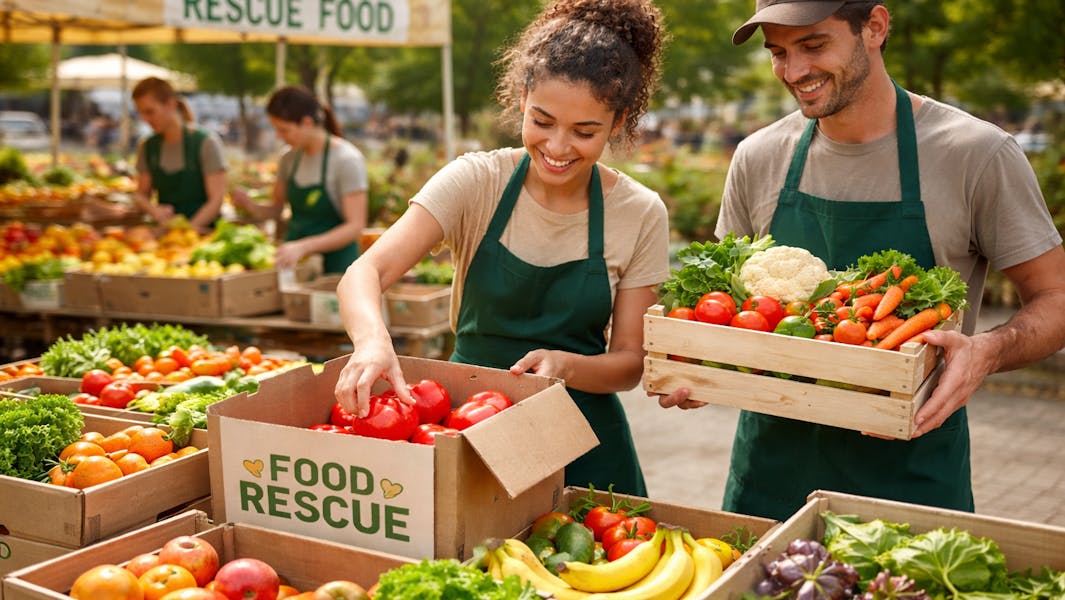




Foody Bag's mission is to reduce food waste.
Made in Australia with love
Copyright 2026 - All rights reserved