
News
Already Selling Out? Read This Before You Renew
A test worth running if your surplus bags disappear every day
14 September 2026
Selling out every day is information
If your surplus bags sell out shortly after you list them, day after day, that tells you something specific. Demand for what you make exceeds the amount of it you have left over.
That is a better position than most shops are in, and it is worth thinking about what it means. It means the constraint is not whether people want your food at a discount. They plainly do. The constraint is how much surplus you actually have, and what you are charged to move it.
Only one of those two is something you can change this month.
The model is the same, so there is nothing to relearn
Foody Bag works the way you already work. You list the number of bags you expect to have spare, set the collection window and the price, and a customer buys through the app before coming in.
The collection step will look familiar too, and you can pick which version suits your counter. The customer taps when they arrive and swipes to collect, or shows a QR code instead. Swipe to collect is what most stores use now, and QR remains there for the ones who prefer it.
Too Good To Go's own guidance for customers describes the same shape: swipe in the app at pickup, staff hand the bag over. Either way it runs on a phone. There is no extra hardware to buy, no terminal to operate and nothing for anyone to key in.
So there is no new workflow to teach staff, no different kind of bag to assemble, and no change to how the food leaves the shop. If your team can already handle a surprise-bag pickup at closing, they can handle this one.
That matters mainly because it lowers the cost of finding out. Trying a second platform is a scheduling decision rather than an operational project.
What we charge, and how to check it against what you pay now
Foody Bag takes 15 per cent. On top of that sits the card transaction fee, which is 1.7 per cent plus 30 cents on a domestic credit card. There is no subscription, no monthly cost and no lock-in period.
On a $9.99 bag that works out at about $1.50 in commission and about 47 cents in card fees, leaving roughly $8.02 with the store. Those are round numbers on one bag price, so run them against your own price and your own volume rather than taking our example for it.
That example is also the dearer end of it. When a customer pays with credit earned through referrals, the transaction fee is lower and can be nothing at all, so some bags land closer to the full price in the store's account.
We are not going to tell you what another platform charges you, because their commercial terms are not published and we are not in a position to state them accurately. You are, though. The number is on your own statements.
So the comparison worth making is the one you can do yourself: take a week of bags at the price you actually charge, apply both rates, and look at the difference. If it is small, this is not worth your attention. If it is not small, it compounds every single day you trade.
You do not have to switch to find out
The obvious objection to any of this is risk. You have a channel that works, and a shop that sells out has more to lose by disrupting that than by leaving things alone.
So do not disrupt it. If you are selling out, you have room to test: put part of your usual allocation on Foody Bag, keep the rest where it is, and compare over a few weeks. Same food, same closing time, same bags. You will find out what happens without betting the channel on it.
One thing not to do is make extra bags to cover both. The moment you bake to fill listings, you are producing stock to sell at clearance prices, which is a different and worse business than selling what was genuinely left over.
What we cannot promise
It would be easy to tell you that the customers who follow your shop on another app will follow it here. We do not know that, and neither does anyone else selling you a platform.
What is reasonable to expect is that some will and some will not. People form habits around the app on their phone as much as the shop on their street, and a customer who has notifications, a saved card and a routine somewhere else does not move for nothing.
That is exactly why the sensible version of this is a split test rather than a switch. Run both, watch what actually happens with your own bags in your own suburb, and let the answer come from your numbers instead of from our marketing.
Where this leaves an independent store
Foody Bag is Australian owned and most of the network is independents rather than chains, which is who the platform is built around. If you are a single-site bakery or cafe, you are the ordinary case here, not the exception.
If you want to try it, you can register your store and list your first bags without committing to anything.
And if you try it and your customers do not follow, you will have learned that for the cost of a few bags you were going to have spare anyway.
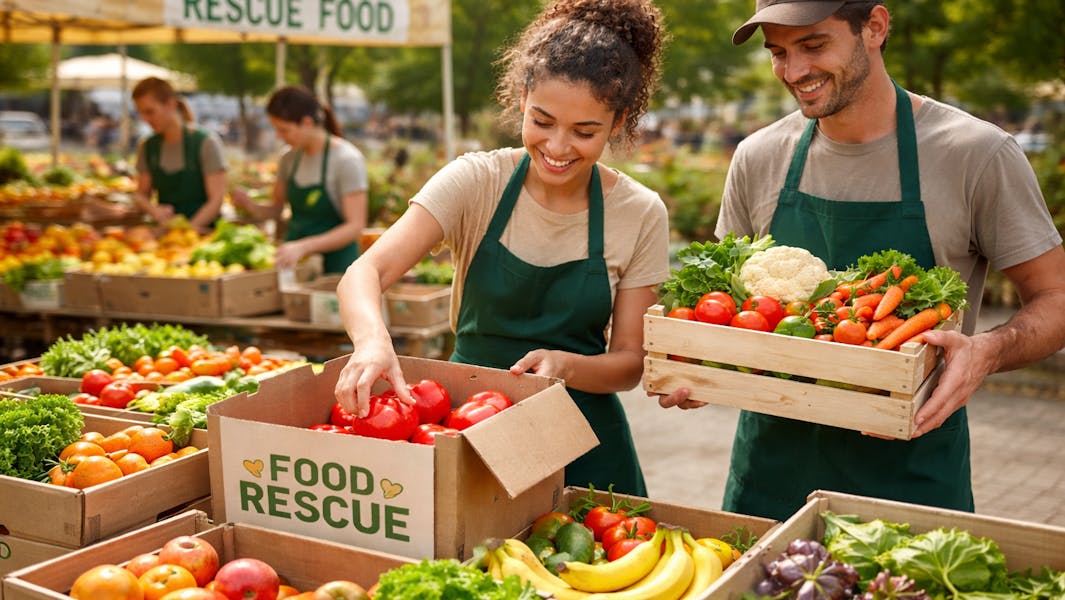




Foody Bag's mission is to reduce food waste.
Made in Australia with love
Copyright 2026 - All rights reserved