
News
What Happens to Unsold Bakery Food at the End of the Day
Five things a bakery can do at closing time
03 September 2026

The problem with baking exactly enough
A bakery that sells out at two in the afternoon has lost sales it could have made. A bakery with a full display case at closing has lost money it already spent. There is no production run that lands exactly right, because nobody knows in the morning how many people will walk past at four.
So bakers deliberately overbake. An empty shelf sends a regular customer somewhere else tomorrow, and that costs more than the tray of pastries does. The surplus at closing time is not a mistake. It is the predictable cost of keeping the shelves worth looking at.
The scale of it is easy to underestimate. More than 319,400 tonnes of food is wasted every year across the Australian bread and bakery value chain, according to the Bread and Bakery Sector Action Plan published by End Food Waste Australia. They put that at roughly the weight of 456 million loaves.
Across hospitality more broadly, Restaurant & Catering Australia puts the sector at about 16 per cent of Australia's total food waste, or close to 1.2 million tonnes a year.
Staff take and the late markdown
The first option is the oldest one. Staff take food home. It is simple, it costs nothing to administer, and it runs out of room quickly. A team of four can absorb a few loaves and some pastries. They cannot absorb a full case, and they cannot do it every night of the week.
The second is the late markdown. Half price after four, or whatever the shop decides. This works, and it has a catch that anyone who has run a counter will recognise. Do it at the same time every day and some regulars simply stop buying at full price. The discount stops clearing surplus and starts creating it.
Both options handle small volumes well. Neither one scales to a bad Tuesday.
Donation, and the law most people get wrong
Food rescue is the option people think of first, and in Perth it operates at real scale. OzHarvest's Perth team runs eight vans, collecting more than 135,000 kilograms of surplus food a month and delivering around 80,000 meals a week.
There is a widespread belief among small food businesses that giving food away creates legal exposure if someone later gets sick. In Western Australia that belief is mistaken. The Volunteers and Food and Other Donors (Protection from Liability) Act 2002 protects people who donate food in good faith for a charitable purpose, where the food was safe when it left them and they passed on whatever the charity needed to know to keep it that way.
What actually limits donation is logistics, not liability. Rescue runs on scheduled routes, refrigerated vans and predictable volume. A single suburban cafe with six croissants and two sourdough loaves at closing does not fit a van route, and no amount of goodwill makes it fit. Donation moves large, reliable surplus very well. It was never built for the small daily tail.
The FOGO bin is a better bin, not a rescue
Then there is the bin. Food organics and garden organics collection now reaches 22 local governments across the Perth, Peel and South West regions, with around nine more expected to join by June 2026, as reported by Waste Management Review. Unlike New South Wales, Western Australia's rollout is funded and voluntary rather than legislated.
FOGO is a genuine improvement on landfill. Food buried in landfill breaks down without oxygen and produces methane. Sent to composting instead, it comes back as something useful. If a pastry has to be thrown out, the FOGO bin is where it should go.
It is worth being clear about what that fixes, though. By the time a croissant reaches the organics bin, the flour, the butter, the water, the electricity and the hour of someone's morning are all already spent. Composting recovers none of that. FOGO deals with waste well. It does not stop food being wasted.
Sold cheaply, to someone standing nearby
The fifth option is to sell it, late and cheap, to somebody close enough to collect it before the shop closes. This is the gap surplus marketplaces exist to fill, and it is the one that suits the small daily tail that donation cannot take and markdowns handle badly.
Foody Bag works this way in Perth. A shop lists however many bags it expects to have spare, sets the pickup window and the price, usually a third to a half of what the food would have cost earlier that day. Someone buys a bag through the app, gets a QR code, and collects it at the counter during that window.
The contents are not itemised, because the shop does not know at ten in the morning what will be left at five. That surprise is not a gimmick. It is the only way to sell food that has not been decided on yet.
What this means if you are the one buying
A few practical things follow from all of this.
- Surplus appears on a schedule. Bakeries have it near closing, because that is when the day's production has finished competing with itself.
- A bag is made of whatever did not sell, so flexibility is the whole skill. Turn up wanting a specific pastry and you will be disappointed.
- Collection windows are short by design. The shop is trying to close.
The thing most worth knowing is the least obvious. Food sold at the end of the day is the same food that was on the shelf at nine that morning, at the same shop, made by the same people. Nothing about it has changed except the clock, and the price.

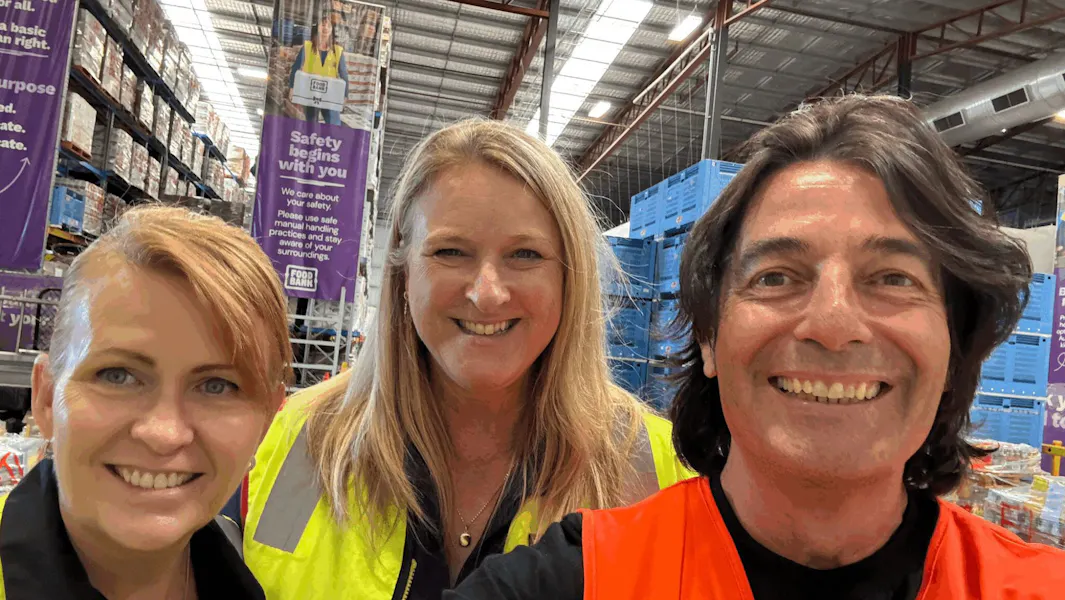


Foody Bag's mission is to reduce food waste.
Made in Australia with love
Copyright 2026 - All rights reserved